2 November 2026
Real Estate Listing Photos Website Speed on Island Internet
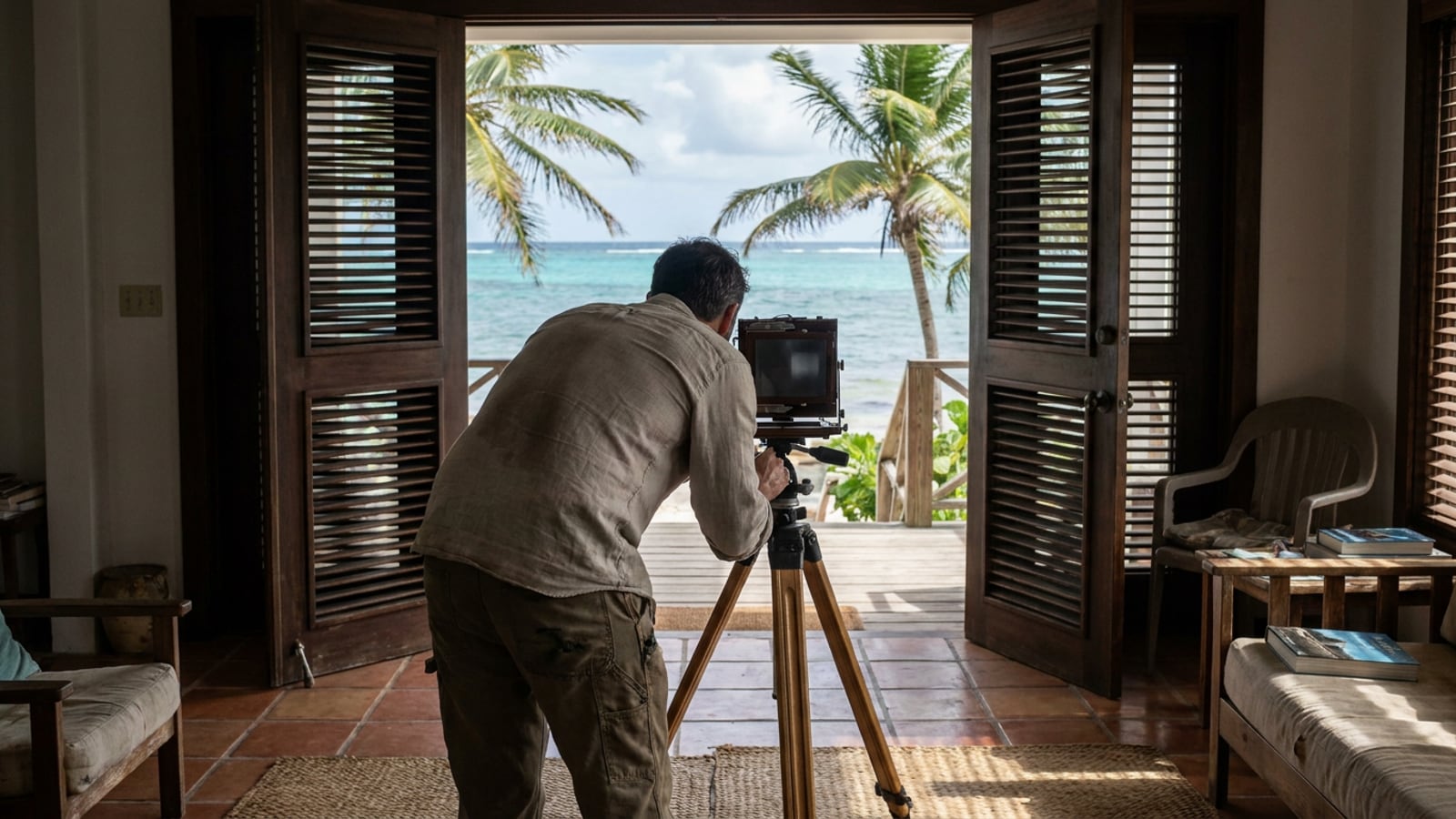
A real estate listing photos website lives or dies on one page: the listing itself, with thirty photographs, a map and a description. If that page takes twenty seconds to appear on a phone on Ambergris Caye, the buyer is gone before the second photo loads. I build and run Propzy, a multi-tenant real estate platform (one system serving several agencies, each with its own website and data), and photo handling is the part I have spent the most time getting right.
This post explains what makes those pages fast, what an agency actually has to do, and what good photography looks like when the connection is thin.
Why do listing pages feel slow in Belize?
The usual cause is not the internet. It is the photographs.
A modern phone camera produces files of several megabytes each. If an agent uploads thirty of those and the website sends the originals to every visitor, the page is asking a phone on a cay to download more data than a feature film trailer. On a good connection in Belize City you might not notice. On a phone at a dock in San Pedro, or on a hotel's shared Wi-Fi, you notice immediately.
The second cause is that everything loads at once. The page tries to fetch all thirty photos, the map, the video and the fonts before showing anything useful. The visitor stares at white space.
Both problems are solved on the server side, which means the agent never has to think about them. That is the point.
What actually makes a real estate listing photos website fast?
One upload, several sizes
On the agency sites I run, a photo is uploaded once. The platform then resizes it into several versions: a small thumbnail for the search results grid, a medium version for the gallery, a large one for the full-screen view. The browser is told which size it should take for the screen it is on.
A phone gets the phone-sized file. A desktop gets the large one. Nobody downloads a twelve-megapixel original to look at a thumbnail.
Modern image formats
The same photo is also saved in newer file formats that compress far better than the JPEG files a camera produces, at the same visible quality. The site serves the modern format to browsers that understand it and the older one to those that do not. The agent uploads the photo they have. The system handles the rest.
Galleries that lazy-load
Lazy loading means a photo is only fetched when the visitor is about to scroll to it. The first two or three images load straight away, so the page looks finished within a second or two, and the remaining twenty-seven arrive quietly as the visitor moves down. If they only look at the kitchen and leave, the other photos were never downloaded at all.
Maps and video treated as guests, not residents
Maps on the Propzy sites use Leaflet, a lightweight mapping library that is far smaller than the usual embedded map, and the map tiles load after the content. Videos are embedded from a hosting service rather than uploaded as raw files, because a raw video on your own server is the single heaviest thing a listing page can carry.
You can see the shape of the platform on the Propzy work page, which covers the agency websites and the CRM (customer relationship management system, where agents track leads and enquiries) behind them.
Will Google show my price and location in search results?
It can, if the page tells it so in a form it understands.
Each listing on the agency sites carries structured data, which is a hidden, machine-readable summary of the page: this is a property, this is the price, this is the location, these are the photos. Google reads that and can show price and location directly in the search result, which is why one listing stands out in a list of ten plain blue links.
URLs matter just as much. Each listing has a proper, readable web address that survives edits, so changing the price or adding photos does not break the link an agent sent to a client last month, and does not throw away the search ranking the page has earned. If you are moving from an old site, the same discipline applies, and I have written about that in detail in keeping your rankings during a site migration.
How should agents shoot property photos?
The fastest website in the world cannot rescue dark, crooked photographs. Most of the improvement in a listing comes from the hour before the camera comes out. My standing advice to agents:
- Shoot wide and level. A wide lens shows the whole room. Keeping the camera level stops the walls leaning inwards, which is the single most common fault I see.
- Shoot in the morning. Softer light, fewer harsh shadows, and in Belize the sky is usually at its best before the afternoon build-up.
- Declutter first. Remove the bins, the cables, the washing, the bottles on the counter. Fifteen minutes of tidying is worth more than any editing.
- Order the photos by room. Exterior, living area, kitchen, bedrooms, bathrooms, outside space. A buyer should be able to walk through the property in their head.
- Include an overview. A floor plan if one exists, or an aerial or wide exterior shot that shows how the parts fit together. Buyers want to understand the layout before they want to see the taps.
Hosted platform or custom build?
Agencies ask me which way to go. The honest comparison:
- A hosted platform like Propzy gets you a working site quickly, with the photo pipeline, the CRM, the structured data and the maps already built and already tested on Belizean connections. You are sharing a system with other agencies, so improvements made for one benefit all. Setup is a matter of days rather than months.
- A custom build makes sense when your workflow genuinely differs from how agencies normally work, or when the website has to talk to something you already run. It costs more time at the start and you own a system that only you use.
- Doing nothing is a real option if you are small and your listings come by referral. It stops being an option the moment a buyer in another country is comparing you with an agency whose pages load in a second.
Whichever route you take, two things should be non-negotiable. You keep the source code and the documentation, and you can export your photographs and listings in full. I deliver every project that way, because an agency should never be a hostage to its own website.
Where to start
- Open your busiest listing on a phone, on mobile data, away from your office Wi-Fi. Count the seconds until the first photo appears. That number is your brief.
- Count how many photos a typical listing has and ask whoever maintains the site what happens to them after upload. If the answer is "nothing", that is the first fix.
- Search Google for one of your own listings and see whether price and location appear in the result. If they do not, structured data is missing.
- Agree a photography standard with your agents, even a single page of it, and apply it to new listings from this week.
- List the three things your current site cannot do that cost you time every week. That list is more useful to an engineer than any feature wish.
If you would like me to look at your listing pages and tell you plainly what is slowing them down, you can reach me through the contact page.